Commercial AV Installation in the Bay Area
Bay Area businesses run on communication. Whether that's a tech company presenting to a board, a restaurant filling a dining room with sound, or a startup running daily video calls from a huddle room, the audio video infrastructure behind those moments matters. This page covers what commercial AV installation involves, what makes the Bay Area market distinct, and how to find the right installer for a business project.
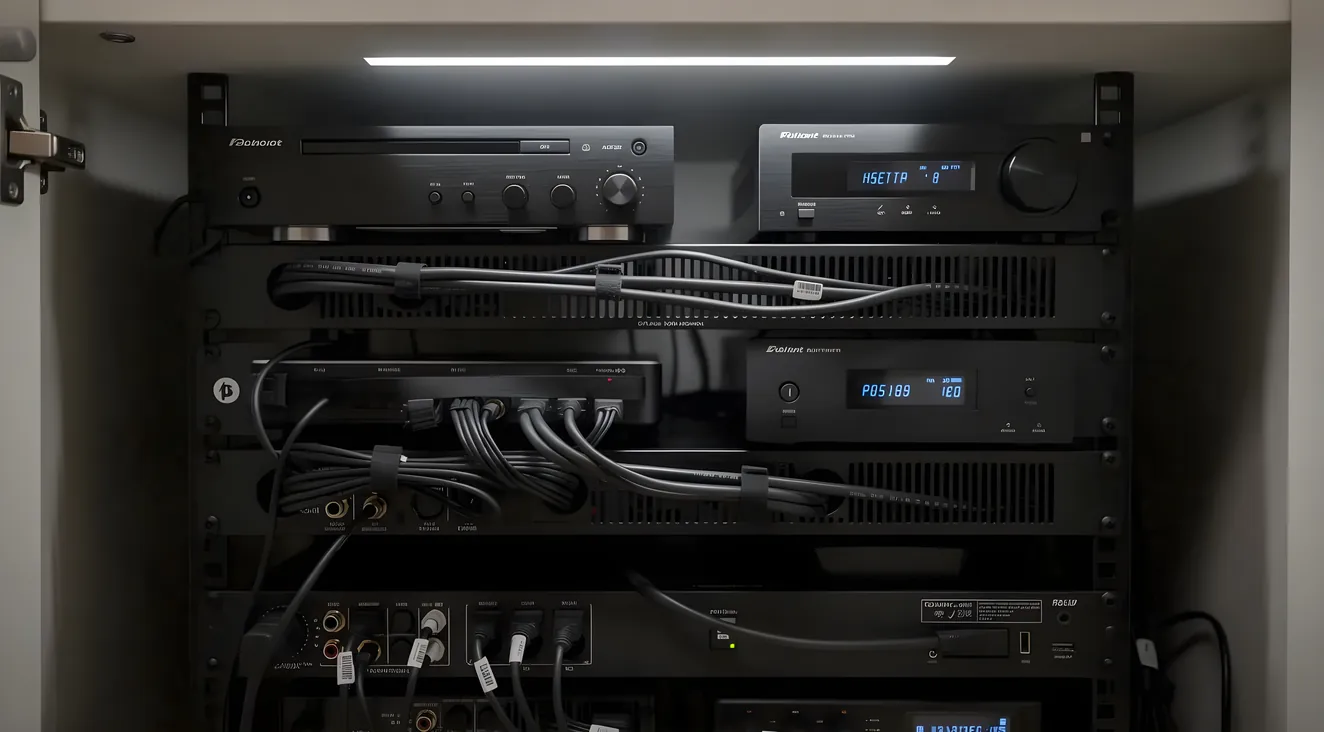
What Commercial AV Installation Covers
Commercial AV is a broad category. Most Bay Area integrators active in this space handle some or all of the following:
Conference rooms and boardrooms. Display systems for video conferencing, presentation screens, ceiling microphone arrays, and speakerphone integration. These projects often include control panels that let any employee walk in and start a call without fumbling with inputs.
Huddle rooms and small meeting spaces. Compact AV setups designed for smaller groups. Typically a single display, a webcam or PTZ camera, a sound bar or ceiling speakers, and a simple control interface. Many offices now have more huddle rooms than large conference rooms, and the demand for cost-effective small-room AV has grown alongside that shift.
Presentation systems and lecture halls. Projectors or large LED video walls, distributed microphone systems, and control rigs for environments where one presenter needs to reach a larger group. These setups are common in corporate training rooms, event venues, and education facilities.
Distributed audio for restaurants and retail. Background music systems with multiple speaker zones, volume controls by area, and input sources that staff can manage from a simple panel or tablet. Restaurants often want different sound levels in the bar, dining room, and patio. Retail environments want audio that covers every corner of a floor without dead spots.
Digital signage and video walls. Display systems for lobbies, retail floors, or any space where visual content needs to run on a schedule or be updated remotely. Video walls consist of multiple displays tiled together, usually driven by a single media player or PC.
Integrated AV and IT networks. Modern commercial AV runs over IP networks, not dedicated coaxial cable. Displays, cameras, audio processors, and control systems all connect to the building network. Integrators who understand network architecture can build systems that IT teams can actually maintain.
Commercial AV in the Bay Area Market
The Bay Area tech economy has produced a market for commercial AV that goes beyond standard office work. Several factors shape what businesses here typically need:
Corporate campuses and open office environments. Large tech companies in Santa Clara, San Jose, and San Francisco have built campuses with dozens or hundreds of meeting rooms, often standardized around a single AV platform so any employee can walk into any room. The integrators who serve this end of the market run enterprise-grade deployments and ongoing service contracts.
Startups and small offices. Growth-stage companies in SoMa, the Mission, and East Bay cities like Oakland and Berkeley often need AV that is functional and flexible without a large capital spend. The same integrators who install residential home theaters sometimes serve this market well, particularly for offices with fewer than 50 people.
Restaurants, bars, and hospitality. The Bay Area dining and hospitality scene has strong demand for distributed audio, outdoor sound systems, and video systems for sports viewing. Coastal conditions in some areas require weatherproof equipment, and the range of venue styles demands integrators who can adapt a system to the space rather than applying a standard package.
Retail and mixed-use developments. Retail spaces in areas like Union Square, Santana Row, and the Emeryville and Oakland waterfront often need background audio, video walls for marketing content, and systems that can be updated by non-technical staff.
Coworking spaces and flexible offices. The demand for on-demand meeting rooms with AV that just works has pushed many building operators and coworking providers to invest in standardized AV installs. The turnover rate in these spaces means the systems need to be durable and simple to use.
Choosing a Commercial AV Installer
Not every AV company that does great residential work is the right fit for a commercial project. A few distinctions matter:
Commercial vs. residential experience. Residential AV is typically a one-time project for a single client who lives in the space. Commercial AV involves working around business hours, coordinating with general contractors and IT teams, and building systems that many different users will operate daily. Ask any prospective integrator to describe commercial projects they have completed and what the handoff process looked like.
Scalability. A small office today may be a larger office in two years. Systems built on platforms like Crestron, Q-SYS, or Biamp can expand as the space grows. Integrators familiar with these platforms can design for future needs, not just current headcount.
Ongoing maintenance and support contracts. Commercial AV systems require maintenance. Firmware updates, calibration drift, hardware failures, and configuration changes are all ongoing needs. Look for integrators who offer service level agreements with defined response times. A system that goes down during a client presentation is a real business problem.
IT and network integration. If your building runs AV over IP, your integrator needs to understand VLANs, QoS settings, and how AV traffic interacts with the rest of your network. Ask how they coordinate with your IT team during installation and what documentation they hand over when the project closes.
Licensed and insured for commercial work. Contractor licensing requirements for commercial spaces differ from residential. Verify that any company you hire holds the appropriate California contractor license (C-7 low voltage is the most relevant) and carries commercial liability coverage.
Bay Area Commercial AV Companies
A handful of Bay Area integrators listed in this directory handle both residential and commercial work.
Reel Audio Video offers residential home theater and automation alongside commercial AV services for offices and business environments. They work across the South Bay and Peninsula. (external site: realaudiovideoav.com)
World of Sound and Vision serves clients in the East Bay and surrounding areas, handling both residential projects and commercial installations including conference room AV. (external site: worldofsoundandvision.com)
If you work for or own a commercial AV company operating in the Bay Area and want to be listed here, use the contact form on the home page to submit your company for consideration.
Related Services
Commercial AV projects often overlap with other service categories listed in this directory:
- Home Theater Installation covers dedicated media rooms and private screening spaces, including those in commercial hospitality settings.
- Home Automation includes control platforms like Crestron and Control4 that are used in both residential and commercial environments.