Outdoor AV Installation in the Bay Area
Outdoor AV installation brings entertainment beyond the living room, turning patios, decks, pool areas, and gardens into functional spaces for watching, listening, and gathering. Bay Area homeowners have taken to outdoor entertainment in a big way, and most local AV integrators have developed experience with the specific equipment and installation practices that outdoor environments require.
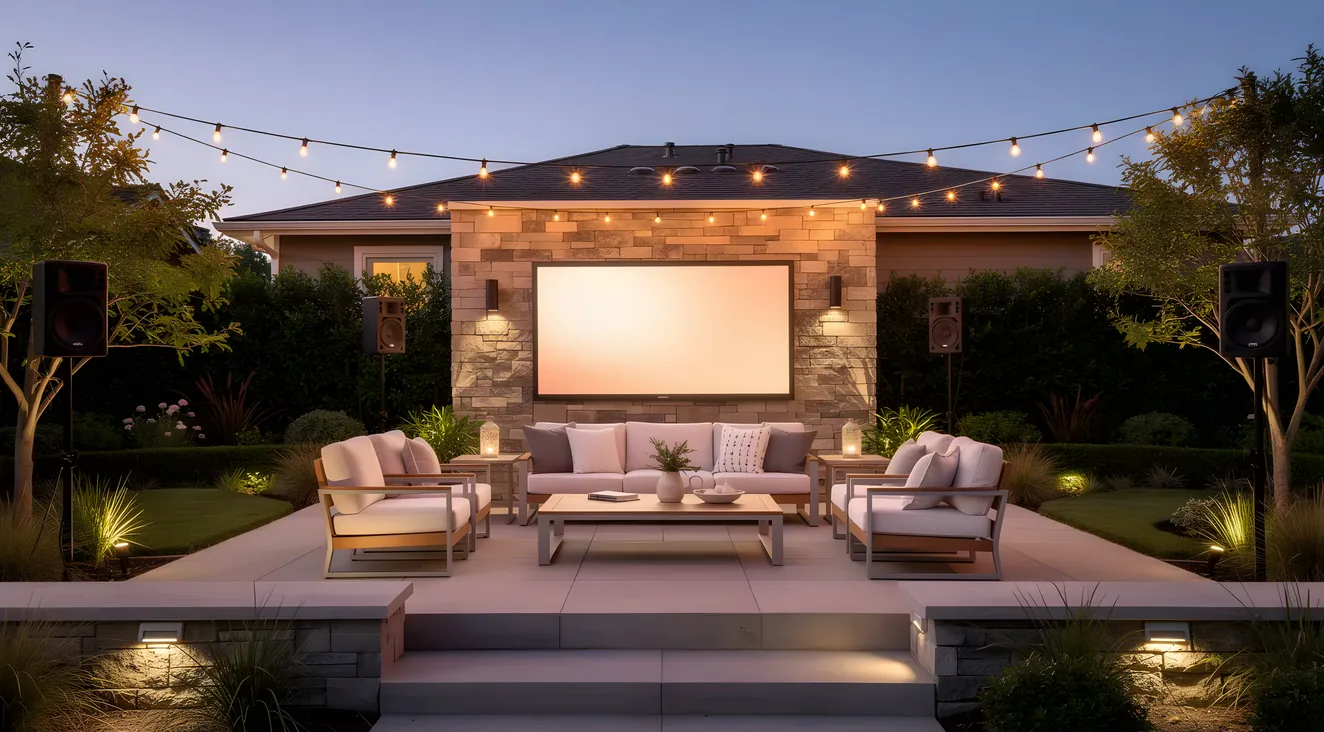
This page covers what outdoor AV installation involves, how Bay Area climate conditions affect system design, and which local companies list outdoor AV as a focus area.
What Outdoor AV Installation Covers
Outdoor AV is not a single product category. It encompasses several types of systems, often installed together as part of a cohesive backyard or patio entertainment zone:
Weatherproof speakers are the most common starting point. These range from in-ground subwoofers and rock-shaped garden speakers that blend into landscaping, to in-ceiling or under-eave speakers mounted on covered patios. Outdoor speakers carry IP ratings indicating their resistance to dust and moisture, and a qualified installer will match the rating to the exposure level of each location.
Outdoor televisions are purpose-built for ambient light and temperature swings that would quickly damage an indoor screen placed outside. Anti-glare panels, higher peak brightness, and sealed enclosures that block insects and moisture are the main differences. Some products are designed for partial-shade locations, while others are rated for full sun. Mounting height and viewing angle matter significantly in outdoor settings.
Projection systems work well in covered outdoor spaces, screened patios, and locations with controllable ambient light. An outdoor projector setup typically requires a weather-resistant projector housing, a dedicated screen, and careful placement to manage throw distance and light bleed from surrounding areas.
Landscape audio distributes sound across a larger outdoor footprint using multiple speaker locations rather than a single focal point. Garden parties, pool areas, and multi-zone outdoor spaces are common applications. These systems connect to the same sources and control interfaces used indoors, so one app or touchpanel can manage the whole property.
Patio entertainment zones combine video and audio in a single outdoor environment. A complete installation might include a mounted outdoor TV, in-ceiling speakers on a covered patio, a weatherproof control keypad, and connections back to the home's network and media system. Cable routing, conduit work, and waterproof junction boxes are part of the scope, not an afterthought.
Outdoor AV in the Bay Area Climate
Bay Area climate is unusually favorable for outdoor entertainment compared to most of the country. Mild temperatures in spring, summer, and fall mean that patios and decks see regular evening use for a large part of the year. But climate conditions vary considerably by microclimate, and those differences affect equipment selection.
Coastal areas from San Francisco through Marin and Pacifica deal with marine layer, salt air, and higher humidity. Equipment in these locations benefits from marine-grade corrosion resistance, particularly for metal hardware, speaker grilles, and enclosure fasteners. Fog and moisture can find their way into anything not properly sealed, and salt air accelerates corrosion on standard-grade components.
The East Bay and South Bay tend to run warmer and drier, with more direct sun exposure. Outdoor TVs in these areas need high peak brightness to be usable during afternoon hours. Heat management matters for electronics mounted in enclosures without shade, and darker surface colors on mounting hardware can reach temperatures that affect component life over time.
Smoke periods during wildfire season have become a regular consideration across the region. Many homeowners now think about whether their outdoor entertainment setup will still function when air quality is poor, which affects how patio enclosures and covered outdoor rooms fit into the overall design.
Temperature swings between day and night are more pronounced inland than on the coast. Condensation inside enclosures is a real failure mode for electronics in areas where temperatures drop 25 to 30 degrees between afternoon and early morning hours. Proper sealing and ventilation in outdoor equipment housings address this directly.
An installer familiar with local Bay Area conditions will specify equipment and enclosures appropriate to a given location, rather than treating all outdoor environments the same.
Choosing an Outdoor AV Installer
Outdoor AV has more technical failure points than indoor installations. Equipment sits in conditions that defeat shortcuts, and a poorly specified system may fail within a season rather than lasting a decade. A few things worth evaluating when selecting an installer:
Weatherproofing expertise. Ask which IP ratings they recommend for your specific installation location, and why. An installer who can explain the difference between IP55 and IP65 ratings, or describe how they handle cable entry points to prevent water intrusion, is working from real experience rather than catalog selections.
Outdoor-rated equipment knowledge. Brands with strong reputations in residential outdoor AV include SunBrite, Seura, and Peerless for displays; Sonance, Polk Audio's atrium line, and Klipsch for speakers. An integrator who works with these categories regularly will have opinions about which products hold up in the field, not just what spec sheets promise.
Landscape and architecture integration. Outdoor AV often intersects with landscaping, hardscape, and exterior architecture in ways that indoor work doesn't. Conduit routing under a patio, speaker wire through a garden bed, and cable management on a pergola all require coordination. Ask whether they handle this work themselves or subcontract it.
Control system integration. A well-installed outdoor system should be controllable from the same interface as your indoor AV and automation. If you already have a Control4, Savant, or Lutron system indoors, confirm that the installer can extend it to the outdoor zones rather than creating a separate system that doesn't talk to the rest of the house.
Bay Area Outdoor AV Installers
Several installers in this directory list outdoor AV explicitly among their residential services and cover the East Bay, Marin, the Peninsula, and Wine Country. Their service catalogs typically include whole-house audio, which extends to outdoor zones, and they handle design through installation as part of a full-scope project.
Reel Audio Video (reelaudiovideo.com) is a San Lorenzo-based integrator with 20 years of Bay Area experience. Their work spans residential and commercial projects across San Francisco, Palo Alto, San Jose, and the Fremont area. They handle projection and screen installations alongside AV system design, which applies well to covered outdoor spaces. Visit Reel Audio Video.
Other integrators in the directory handle outdoor AV as part of broader whole-house audio or home automation projects. If you are planning a project that ties outdoor entertainment into interior systems, whole-house audio and home theater installation listings are relevant starting points.
Planning Your Outdoor AV Project
Outdoor AV projects vary considerably in scope. A single speaker zone on a covered patio is a different engagement than a multi-zone landscape audio system with an outdoor TV, weatherproof subwoofer, and integration into a whole-home automation platform. Most integrators offer consultations before scoping work, and the site visit typically covers cable routing, power access, equipment placement, and exposure conditions.
If you are earlier in the planning process and want to understand what goes into a full outdoor setup, the outdoor entertainment setup guide covers typical project components, equipment categories, and questions to bring to a consultation.